
The Moat
AfroMax Investor Hub — The Competitive Advantage
Our culture is our superpower. And you cannot acquire this superpower. You have to be born with it.
This is not a tagline. It is the most precise description of AfroMax's competitive position I can offer. Every serious investor who reads the previous articles in this series arrives at the same question: what stops a well-funded competitor from building the same thing? The answer has three parts — one structural, one cultural, and one temporal. Together they form a moat that is genuinely without precedent in the history of social media.
Part One: The Concentric Incentive Trap
While building AfroMax, I identified a competitive phenomenon that does not yet appear in business school curricula, but should.
I call it the Incentive Trap Moat — a concept I developed in the course of building this platform, with no prior equivalent in business strategy literature. It describes a competitive barrier that a company's rivals build against themselves — not through failure or neglect, but through the logical operation of their own business model. The barrier is not constructed by the company that benefits from it. It is constructed by the competitor's own economic DNA. And because dismantling it would require the competitor to destroy what they are, it is permanent.
AfroMax does not have one Incentive Trap Moat. It has two — operating simultaneously at different levels, one nested inside the other. This configuration, which I call the Concentric Incentive Trap, is to my knowledge without precedent in the history of competitive strategy.
Understanding it requires understanding both layers.
The Architectural Paradox
Clayton Christensen's Innovator's Dilemma describes incumbent failure as a crisis of sight — companies that ignore low-end markets until a disruptive competitor moves up-market and it is too late. The Incentive Trap is a different phenomenon entirely. It is not a crisis of blindness; it is a crisis of paralysis. The major platforms see the multi-trillion-dollar scale of this community perfectly clearly. They have the capital to pursue it and the engineering talent to build for it. They are still completely locked in place — not because they cannot see where AfroMax is going, but because reaching it would require the active demolition of their own live revenue engines. That is not the Innovator's Dilemma. That is something worse.
The Outer Moat: Economic Exclusion
The major platforms — TikTok, Instagram, YouTube, Facebook — are not ignoring the Global Black Community because they lack the engineering talent to serve them. They are structurally incapable of building what AfroMax is building. The distinction matters enormously to an investor evaluating the durability of this opportunity.
Their entire architecture is built on advertising. Meta's advertising business accounts for over 97% of its total revenue. TikTok's parent company ByteDance generates the overwhelming majority of its revenue from the same source. These are not percentages that can be quietly reduced. They are the load-bearing walls of the business. Remove them and the structure collapses.
An advertising-funded platform makes money in direct proportion to the purchasing power of the audience it delivers to advertisers. A Cultural Ambassador in Lagos with an audience in London and New York is, to that model, a problem to be managed — not an opportunity to be served. The ad revenue she generates reflects the CPM rates of her local market, not the cultural resonance of her work or the genuine spending power of the diaspora audience consuming it. The platform extracts the cultural value and returns a fraction of the economic value. This is not a policy choice. It is the arithmetic of advertising.
To replicate AfroMax's architecture, a major platform would need to accomplish the following simultaneously:
Abandon advertising as its primary revenue model. AfroMax earns from events ticketing, dating, gifts, and subscriptions — not ads. For a major platform to follow this path, it would need to walk away from the revenue stream that funds its operations, justifies its valuation, and services its investor obligations. Retrain years of algorithmic signal history. Every major platform's algorithm has been trained on billions of data points accumulated over years — all of them optimised around engagement, watch time, and passive consumption. AfroMax's algorithm — Divination — was built from the ground up around a different signal entirely: depth of relationship progression. Retraining a major platform's algorithm to optimise for connection rather than consumption would require discarding the signal history that makes the algorithm functional. It would mean years of degraded performance during the transition — while AfroMax continues to compound. Rebuild Cultural Ambassador relationships around community depth. The major platforms measure Cultural Ambassador success in reach and impressions — metrics that serve the advertising model. AfroMax measures it in friends, events attended, and community presence. A major platform attempting to shift this frame would face immediate resistance from Cultural Ambassadors whose brands, partnerships, and income streams are built entirely around the old metrics. Explain to Wall Street why watch time is being deliberately reduced. Every quarterly earnings call for a major social platform includes watch time and daily active user figures as primary performance metrics. A platform that announced it was intentionally reducing watch time in favour of deeper connection would face an immediate and severe market reaction. Do all of this while the ad revenue is still flowing. This is the decisive constraint. Every step above requires dismantling something that is currently generating billions in revenue. No public company with fiduciary obligations to shareholders can demolish a live revenue stream on the basis of a philosophical commitment to a different model.This is the outer Incentive Trap Moat. The major platforms cannot enter AfroMax's territory economically — not because they lack the will, but because crossing the threshold would require them to become something their entire financial structure forbids.
The Inner Moat: Infrastructure Exclusion
Inside the economic exclusion sits a second barrier. This one operates at the geographic level — and it is, if anything, more permanent than the first.
AfroMax's centre of gravity is the African continent. Not the African city. The continent — including the villages, the rural communities, the places where connectivity is intermittent and devices are entry-level and the culture is most alive and least captured on camera.
This is not an engineering challenge I decided to take on for altruistic reasons. It is the strategic heart of the platform's content model. The villages are the cultural centres. The ceremonies, the crafts, the elders, the oral traditions, the things that have never been filmed — they do not live in Lagos or Nairobi's business districts. They live where the signal is weakest. And the Cultural Ambassador who films there, who carries that content to the world, is the engine of everything AfroMax is building.
I have been testing this in the field since before public launch. A Cultural Ambassador filming in a Kenyan village reported one to two seconds before video playback on a local network — close to seamless. On her previous visit, her uncle appeared on camera. He was paid. He used the money to buy groceries for his home. On her return visit, he came to find her the moment she arrived, asking if there was work.
That is not an anecdote about one man and one bag of groceries. That is the proof of concept for what AfroMax means to a village economy — and it happened before the platform has a single public user.
An advertising-funded platform has no financial reason to build toward this. Village-grade connectivity optimisation requires infrastructure investment — smaller payload sizes, aggressive adaptive bitrate laddering, network-aware prefetch logic, edge delivery tuned for intermittent connections — none of which generates a return for a platform whose revenue depends on delivering high-value audiences to advertisers. A user on a 2G connection in a Kenyan village is not a premium advertising target. To the ad model, she is a cost centre.
To AfroMax, she is a Cultural Ambassador. The exchange rate between her local currency and the diaspora dollars her content earns makes every video she posts a windfall by local standards. The infrastructure investment that serves her is not a charitable gesture. It is the foundation of the content supply that powers the entire platform.
This is the inner Incentive Trap Moat. For a major platform to reach AfroMax's village-level Cultural Ambassadors, they would have to make infrastructure investments that their advertising model will never justify. They are not locked out by capability. They are locked out by incentive. And the incentive will not change as long as advertising is their business.
The Structure of the Trap
The two moats reinforce each other in a specific way that makes the configuration particularly durable.
The outer moat prevents the major platforms from serving the Global Black Community's Cultural Ambassadors fairly at the economic level. The inner moat prevents them from reaching the communities where the most authentic cultural content originates. A competitor who somehow solved the outer problem — who abandoned advertising, retrained their algorithm, and rebuilt their Cultural Ambassador relationships — would still face the inner problem: the villages where AfroMax's most irreplaceable content is produced are infrastructure investments that make no sense until you have already committed to a non-advertising revenue model.
The outer moat must be crossed before the inner moat is even visible. And crossing the outer moat requires destroying the business.
I do not have to maintain either barrier. The competition maintains both, permanently, by remaining exactly what they are.
Part Two: The Cultural Moat
The Concentric Incentive Trap establishes that the major platforms cannot reach AfroMax's territory. The cultural argument establishes something deeper: even if they somehow solved both structural problems, they still could not build what AfroMax has.
Culture cannot be acquired. It cannot be engineered from the outside. It cannot be purchased with a product launch budget or manufactured with a diversity hiring initiative or simulated with an algorithm trained on demographic data. It is either authentic or it isn't — and communities that have spent decades watching their culture extracted without compensation have an acute, finely tuned ability to tell the difference.
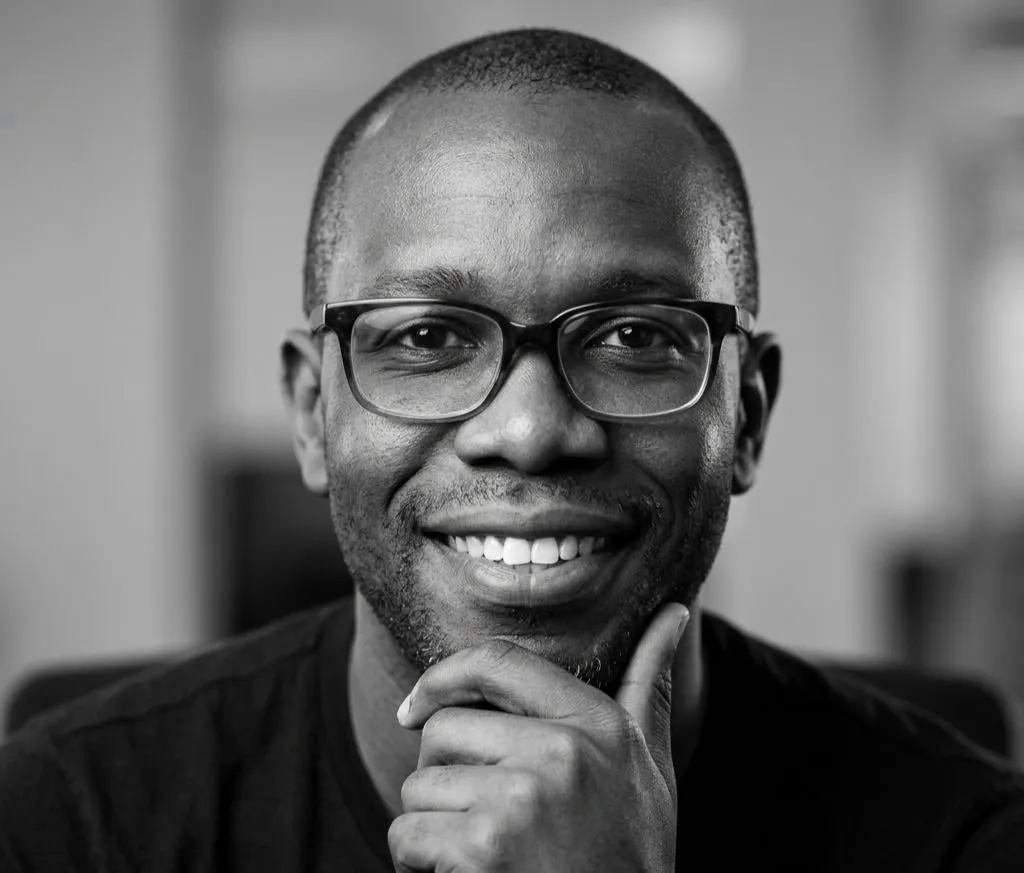
I built AfroMax from inside the Global Black Community. Not as an observation of it. Not as a product designed for it by someone who studied it. From inside it — as a founder from Carriacou, Grenada, whose relationship with a Kenyan partner directly inspired the platform's core features, whose community gave the platform its name, whose lived experience of diaspora life is encoded in every product decision.
The platform's name changed from AfroTok to AfroMax because the community told me it was derivative. That conversation happened in public, in Reddit threads that are still readable, before AfroMax had a single user. The community shaped the product before the product existed. That is not a user research process. That is belonging.
A community member in r/Nigeria offered to become a platform ambassador — unprompted, with nothing in it for them yet — because they recognised in AfroMax something they had been waiting for. That signal cannot be manufactured. It cannot be bought. It is the output of a platform built by someone the community recognises as one of their own.
The Network Effect That Compounds the Moat
Beyond the structural and cultural arguments, AfroMax has a third layer of competitive protection that emerges as the platform grows: the network effect specific to the Global Black Community.
The Global Black Community is, by its nature, distributed across continents. The Grenadian family in Brooklyn. The Kenyan professional in London. The Nigerian Cultural Ambassador with an audience in Lagos, Toronto, and Atlanta simultaneously. The Ghanaian student in Berlin. The community is held together by shared cultural identity across geographic distance — and the value of a platform serving them increases non-linearly as the network grows.
Every new user on AfroMax makes the platform more valuable for every existing user — not because of generic network effects, but because of the specific, irreplaceable value of finding your people. The Global Black Community is not looking for a large platform. It is looking for the right platform. Once AfroMax becomes the place where the community is, the switching cost for any individual user is not the loss of a social media account. It is the loss of their community.
That switching cost is the network effect that no competitor can replicate from the outside. You cannot build the community's home by acquiring users. You build it by being the place the community recognises as theirs — and that recognition, once established, compounds with every conversation, every event, every connection that happens here and nowhere else.
The Third Moat: Speed to Indispensability
The Concentric Incentive Trap and the cultural moat explain why the major platforms cannot replicate what AfroMax has built. They cannot dismantle their advertising businesses, and they cannot manufacture authentic cultural belonging from outside the community.
But there is a third threat the first two moats do not address, and a serious investor will spot it: a well-funded new entrant. A venture-backed startup with no legacy ad business to protect, willing to copy AfroMax's architecture, hire founders from inside the community, and try to scale the same thesis with $50 million in capital and aggressive growth tactics.
This threat is real. It is exactly the dynamic that overtook BlackPlanet — a platform that was first, that proved the audience existed, that reached 16 million Black users five years before Facebook existed, but that was eventually outpaced by a generalist giant arriving second with more capital and broader network effects. Being first is not enough. Architecture is not enough by itself. The defence against a fast follower is speed.
AfroMax's third moat is the velocity at which the platform becomes indispensable to its community. Once a user has built their friend network on AfroMax, attended events through AfroMax, sent and received Bride Price on AfroMax Love, followed Cultural Ambassadors whose Series they are deep into, sent Gold to people they care about, and accumulated cultural memory inside the platform's daily rhythms — the cost of leaving is not the loss of an app. It is the loss of an entire chapter of their life.
The remote cinema event model accelerates this dynamic in a way no competitor can easily replicate. When a Lagos Cultural Ambassador performs live on a Brooklyn cinema screen to a ticketed crowd of diaspora members who bought tickets through AfroMax, discovered the Cultural Ambassador through AfroMax, and were organised on the ground by AfroMax Street Teams — every person in that room has an AfroMax memory that exists nowhere else. The film they watched. The Cultural Ambassador they saw. The community they were part of for two hours in a darkened cinema in Brooklyn. That memory is not portable. It belongs to AfroMax.
A copycat arriving second cannot offer those friends, those events, those Cultural Ambassadors, that history. The Global Black Community will not migrate to a platform that requires them to abandon their accumulated relationships any more than they would abandon a city where their family lives because a similar city opened next door.
Architecture protects AfroMax from the major platforms. Culture protects it from outsider imitations. Speed protects it from everyone else.
The 50 Managed Accounts: No Empty State, No Cold Start
AfroMax eliminates the cold start problem that has historically been one of the most significant barriers to new social platform adoption — through a design decision that also expresses the platform's cultural philosophy.
Every new user who joins AfroMax immediately has faces in their Friends display. AfroMax maintains 50 platform-managed accounts — seed accounts that are culturally representative of the diaspora communities the platform serves. From the very first session, the room is never empty. There is no moment where a new user arrives and feels like they are the first person here.
This is the modern answer to the problem MySpace solved in 2003 with Tom — everyone's first friend. AfroMax's version is culturally intentional. The faces a new user sees from day one signal: your people are already here. As real connections form, the managed accounts naturally recede — replaced by actual friends and mutual connections, without any visible transition. The warmth was always there. Then quietly, it became real.
For a competitor attempting to enter this market, the cold start problem is not solved by managed accounts alone. It is solved by managed accounts that feel like the community — faces and identities that a new user from Lagos or Kingston or Brixton looks at and recognises. That cultural specificity is not something a generic platform can replicate by creating fifty placeholder profiles. It requires knowing who the community is, what they look like, and why representation at the entry point matters.
I know. A competitor entering from the outside would have to learn — and learning takes time that AfroMax is using to compound.
What Cannot Be Acquired
There is a version of this competitive analysis that a sophisticated investor might push back on: what if a major platform acquires AfroMax?
It is worth addressing directly. An acquisition would transfer the technology, the team, and the user base. It would not transfer the cultural legitimacy. The community that shaped AfroMax before it launched — that changed its name, that sharpened its pitch, that offered ambassadorship before there was anything to be an ambassador for — did so because they trusted me and the foundation I was building on. That trust is not a corporate asset that transfers in a term sheet.
The history of cultural platforms acquired by major corporations is not encouraging. What made them valuable was almost always the thing the acquiring company was least equipped to steward. AfroMax's independence is not incidental to its value. It is load-bearing.
The Moat in Three Foundations
AfroMax's competitive position rests on three foundations that reinforce each other.
The structural foundation: the Concentric Incentive Trap — two nested barriers that the competition's own business model builds and maintains permanently. The outer moat locks them out economically. The inner moat locks them out geographically. I do not have to defend either. The competition defends both by staying exactly what they are. The cultural foundation: authentic belonging within a community that has spent two decades watching its culture extracted without compensation, and that recognises AfroMax as something built from inside rather than aimed at it from outside. The speed foundation: velocity to indispensability — the work the current funding cycle exists to fund. Building the network density, switching cost, and cultural memory inside AfroMax that no fast follower can replicate, before any well-funded entrant can establish a competing version of the same thesis.The first foundation means the major platforms cannot follow AfroMax structurally. The second means outsiders cannot follow it culturally. The third means new entrants cannot follow it fast enough. Together they create a moat that is not a feature advantage or a first-mover advantage — it is a structural, cultural, and temporal separation that widens as AfroMax grows.
Our culture is our superpower. What changes now is who owns the infrastructure around it.
AfroMax is a video-first cultural lifestyle platform for the Global Black Community. Content, dating, and events — built for culture, not addiction. Learn more at afromax.app.
Previously: The Revenue Model Is the Product — how AfroMax makes money and why it compounds.
Next: The Founder — why this platform could only have been built by this person.