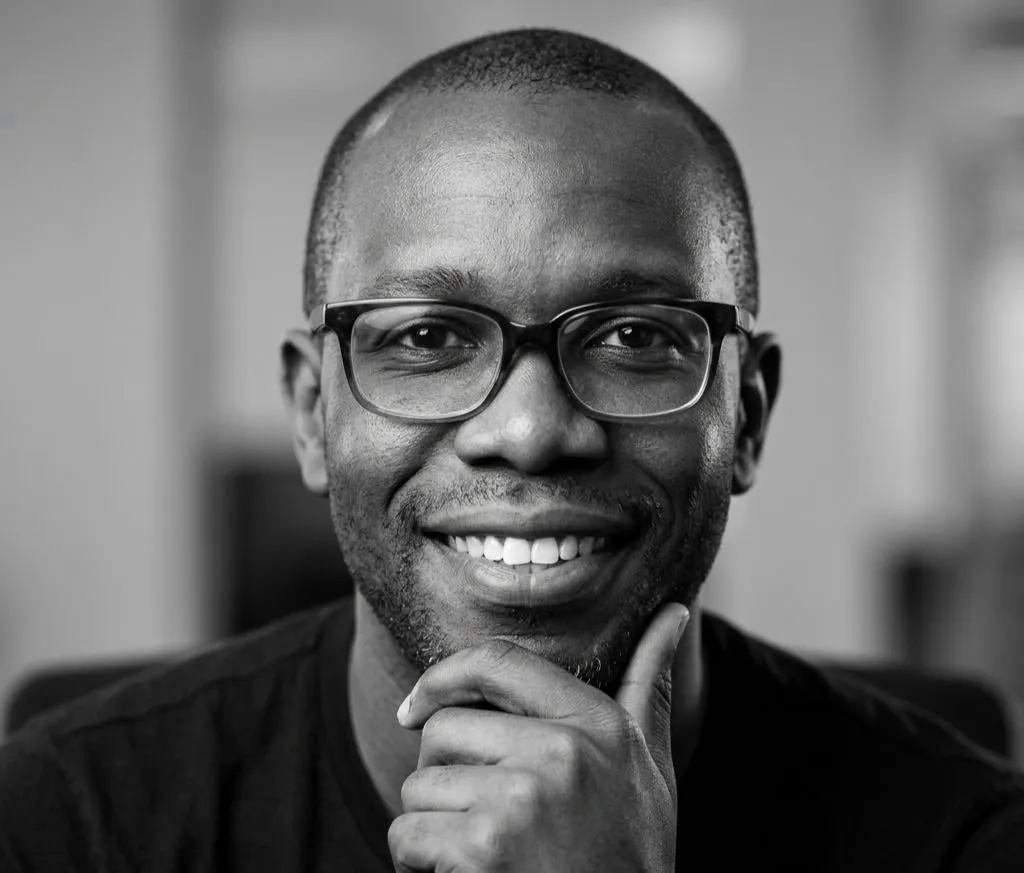
The Founder
AfroMax Investor Hub — The Person Behind the Platform
In 2001, a teenager on the small Caribbean island of Carriacou taught himself to code.
Not for a class. Not for a job. Because he had an idea — a specific, persistent idea that the internet could be used to build something that connected people in ways that hadn't been built yet. He didn't know exactly what it looked like. He didn't have a name for it. He just knew that the technology was there, and that nobody had yet built the thing he could see.
He was twenty-three years ahead of AfroMax. But he had already started.
Carriacou
Carriacou is a small island — population under ten thousand — that sits between Grenada and the Grenadines in the southern Caribbean. It is Grenada's sister island, and its people are called Kayaks. It is the kind of place where community is not a value you aspire to. It is the water you swim in from birth. Where you know everyone and everyone knows you. Where culture is not something you consume — it is something you live, loudly, together.
Trevor Peters grew up there. And everything AfroMax is built on — the Ubuntu philosophy, the belief that connection is the destination and content is just the entrance, the conviction that a platform should make money when people genuinely come together rather than when they scroll alone — traces back to an island where that was simply how life worked.
You don't build a platform that optimises for human connection by studying the concept. You build it because you grew up somewhere that showed you what it looks like.
The Long Education
The coding skills came first. The cultural specificity came later — and it came through education.
The more Trevor learned about African history, African philosophy, the ancestral culture that Caribbean identity reaches back toward, the more the vision for what he was building sharpened. The platform that had been a general idea about connection became something more specific: a home for the African descended world. A place where the culture that has always been the most generative force on the internet would finally have infrastructure built specifically for it.
Our culture is our superpower is not a tagline Trevor invented. It is a conclusion he arrived at — slowly, through years of learning who he was and where he came from. And it became the north star of everything he built.In the middle of building AfroMax, he took a DNA test.
The West African culture he had been most drawn to — the one that resonated deepest, that felt most like recognition rather than discovery — was his own. Igbo. His ancestry, waiting for him to find it. The culture he had been building toward was the culture he had always carried.
That is not a founder who identified a market opportunity. That is a founder who spent twenty-five years finding his way home — and then built the infrastructure for everyone else to do the same.
The Proof of Concept He Lived
Before AfroMax, before the protocol doc and the Flutter architecture and the Cloudflare Stream integration, Trevor Peters proved the core thesis of the platform's business model with his own hands.
He built a Facebook group of 4,000 local fans. He hosted events. He grossed between $6,000 and $8,000 per event — not from a massive following, not from celebrity performers, but from a community that was engaged, local, and willing to show up. He knew his audience. He showed up for them. They came.
When he added text message marketing — short codes, direct outreach — he converted 30% of recipients to ticket buyers. Thirty percent. In an industry where 2% conversion is considered strong, he was achieving fifteen times that rate, because he understood that the relationship between a community and its events is not a marketing problem. It is a trust problem. And trust, built properly, converts at a rate no advertising budget can match.
This is the arithmetic behind the claim in the Business Model article — that 4,000 engaged local followers is enough to build a sustainable Cultural Ambassador business through events. Trevor Peters did not model that number. He lived it. He is not asking Cultural Ambassadors to trust a theory. He is asking them to replicate something he already proved.
The Long-Distance Laboratory
AfroMax's two most distinctive features were not designed in a product sprint. They were lived first.
Trevor's girlfriend is Kenyan. She lives in Kenya. He lives in New York. The relationship is sustained across eight time zones, an ocean, and the specific, daily texture of a long-distance love between two people from different parts of the Global Black Community — the voice calls that stretch into hours, the cultural exchange that happens when someone from the Caribbean and someone from East Africa find each other and discover how much they share.
They developed a ritual without naming it: WhatsApp call open, TikTok running, each scrolling their own feed, sending across what they found. When something great appeared on one screen it traveled to the other. They reacted in real time. Hours passed. Neither noticed. It was, simply, the best viewing experience either of them had ever had — not because the content was better, but because they were experiencing it together, each acting as the other's human algorithm, filtering out the noise so that what reached the other person was already worth watching.
That ritual became Chill Together.
And before they ever had their first conversation — before a single message passed between them — Trevor had already fallen for her. Through her dance videos. Watching her move, hearing the energy she carried, feeling something shift before he had any language for it. The heart moving before the mouth opened. That experience — chemistry felt through video, attraction rooted in authentic self-expression rather than a curated photograph — became AfroMax Love.
The platform's two most innovative features are not features. They are a relationship. AfroMax is not an abstraction. It is a love story that became a product.
Make It a Feature, Not a Bug
There is one more product story that belongs here — not because it is the largest, but because it reveals the instinct most clearly.
During AfroMax's onboarding development, a race condition appeared. A timing conflict between system processes meant that new members, after completing sign-in, were met with an error message on the home screen before the app finished loading.
Trevor's response was not to file a ticket and move on. He looked at the error state — a moment of interruption between sign-in and the home screen — and recognised something. The error was occupying a real moment in the member's experience: the arrival. That moment, which the bug had accidentally revealed, was actually one of the most valuable moments in the entire onboarding flow. Every new member passes through it. It is the threshold between signing up and being inside. And it was being wasted on an error message.
The error message was removed. In its place: a hype welcome video. A custom-composed AfroMax song. Jajab musicians. Dancers from Uhuru Park in Nairobi. A Zulu dancer. An Igbo girl in Yoruba attire playing a drum. A swipe-up mechanic was added — so that the welcome video not only greeted the member but taught them the platform's core navigation gesture in the same moment. The bug had accidentally invented an onboarding flow better than anything on TikTok, Instagram, or any other social platform. The race condition stays. The error message does not.
This is not a story about clever engineering. It is a story about a founder whose cultural instincts are calibrated finely enough to see a better product hiding inside what looked like a problem. A founder from a different background, looking at the same error state, would have filed a ticket and moved on. Trevor Peters saw a cultural moment and kept it.
Make it a feature, not a bug. That principle — born from that specific moment — is embedded in how AfroMax approaches every product decision. The platform does not just fix what breaks. It asks what the break is trying to say.Built in Public, Shaped by the Community
In the months before launch, Trevor took AfroMax somewhere most founders would not dare: Reddit.
He posted in r/blackmen — 91,000 members, one of the most engaged and least forgiving Black communities on the platform. He posted in r/Nigeria. He asked what people thought. And the community told him.
Some of it was brutal. A verified member told him the platform needed an elevator pitch. Another wrote a paragraph about car salesmen that stayed with him for weeks. The pile-on was real. So was the listening.
The platform's name changed as a direct result. AfroTok — derivative, reactive, positioned as a response to TikTok rather than something original — became AfroMax. Not through a branding agency or a naming sprint. Through the community telling the founder the truth, and the founder acting on it.
Then, in r/Nigeria, something happened that no marketing budget can manufacture. A community member — unprompted, with nothing in it for them yet, before AfroMax had launched a single user — offered to become a platform ambassador.
Not because they were asked. Because they recognised something they had been waiting for.
That moment — one person in a Reddit thread extending trust before there was anything concrete to trust — is the clearest proof of product-market resonance AfroMax has produced. It is also the clearest proof of what kind of founder built it. The community recognised AfroMax because the community recognised Trevor. One of their own, building something for them, willing to be told when he was wrong, willing to change.
That relationship between founder and community is not replicable. It is not a strategy. It is who he is.
The Team
AfroMax is built by a small, intentional team.
Trevor Peters — Founder and CEO. Grenadian, from Carriacou. Based in New York. Twenty-five years from the first line of code to open launch. The platform is the conclusion of his life's work so far. Obiora Nwude — Advisor. Obiora advises AfroMax on engineering and DevOps, bringing the depth and discipline the platform's next phase requires. His focus is the work that de-risks technical scaling: infrastructure, monitoring, and the engineering hires that carry it. Faith Lumbasi Wangamati — Creative Director. Faith holds AfroMax's creative standard — producing content for Cultural Ambassadors across the platform, developing the aesthetic language of AfroMax's visual identity, and bringing a creative instinct that consistently pushes the work beyond what is merely good toward what is genuinely right. A 24-year-old Kenyan Cultural Ambassador with 43,000 TikTok followers built organically alongside her university studies, Faith is the person on the team who understands the platform's primary market from the inside. Debby Ukadiala — Content Producer. Known on TikTok as Dimple Doll, Debby brings over 1.2 million followers and a track record of 500+ videos produced for the AfroMax content library. Her content strikes the balance that matters most — commercially compelling without sacrificing cultural authenticity.Small teams build focused products. AfroMax is a focused product — every feature intentional, every design decision deliberate, every piece of copy written to express a specific philosophy rather than fill a space. That focus is a function of the team's size and the founder's clarity of vision.
Why This Platform Could Only Have Been Built by This Person
There is a version of AfroMax that a well-funded team could have built from the outside — a platform for Black audiences, video-first, with dating and events bolted on. Competent. Fundable. Culturally empty.
What makes AfroMax different is not the feature set. It is the foundation. The Ubuntu philosophy is not a positioning choice — it is the architectural assumption that shapes every product decision, because the founder grew up in a place where it was simply true. The 4,000-fans-is-enough thesis is not a market insight — it is a lived result, proven at personal risk before it was ever written into a business model. The Chill Together feature is not a product innovation — it is a relationship expressed in code. The cultural specificity of AfroMax — the Igbo ancestry, the Grenadian roots, the Kenyan love story, the Reddit community that named the platform — is not a brand strategy. It is a life.
What Trevor Peters has built is not a platform that lives in his head. It is a platform whose philosophy has been encoded into institutional documents — the Cultural Doctrine, the Competitive Doctrine, the product architecture of the Ubuntu Level Protocol — that exist independently of any individual. The vision is Trevor's. The systems that carry it forward are the platform's. AfroMax is not betting on one person staying healthy. It is betting on a set of principles, encoded into product decisions and institutional frameworks, that have enough internal logic to guide the platform long after the founder stops being the only person who understands them.
Investors backing AfroMax are not backing a product. They are backing the founder whose entire adult life has been a preparation for exactly this platform — who learned to code because he could see it coming, who proved the economics with his own events, who fell in love across an ocean and built the features to hold that love, who took a DNA test and found out the culture he was building toward was the one he had always carried.
The platform is the destination of a twenty-five year journey toward self-knowledge. That journey cannot be acquired. It cannot be replicated. It cannot be funded into existence by a competitor who did not live it.
Our culture is our superpower. AfroMax is the infrastructure that lets it compound. And Trevor Peters is the only person alive who could have built it.
AfroMax is a video-first cultural lifestyle platform for the Global Black Community — Africa, the Caribbean, and the diaspora worldwide. Content, dating, and events — built for culture, not addiction. Learn more at afromax.app.
Previously: The Moat — why no well-funded competitor can replicate what AfroMax has built.
Next: The Traction — what has already been proven before the first day of open launch.